Key Takeaways
- PVARA gives existing crypto infrastructure providers until Sept. 5, 2026, to apply or halt services.
- Pakistan’s new rules target a massive market already holding 30-40 million crypto users.
- Binance and HTX enter the licensing race after securing preliminary NOCs in 2025.
The Pakistan Virtual Assets Regulatory Authority (PVARA) opened the licensing gates after final regulations under the Virtual Assets Act, 2026, were notified. Existing virtual asset service providers operating when the law took effect March 5 have until Sept. 5 to file for a no-objection certificate, or NOC.
Pakistan Puts Crypto Firms Against the Clock
The latest deadline, also shared on social media, turns Pakistan’s months-long regulatory buildout into a real-world compliance test. Providers filing complete applications on time can generally keep existing services running while regulators review them. Miss the cutoff and affected operations must stop, while continuing without applying becomes an offense under Section 70 of the law.
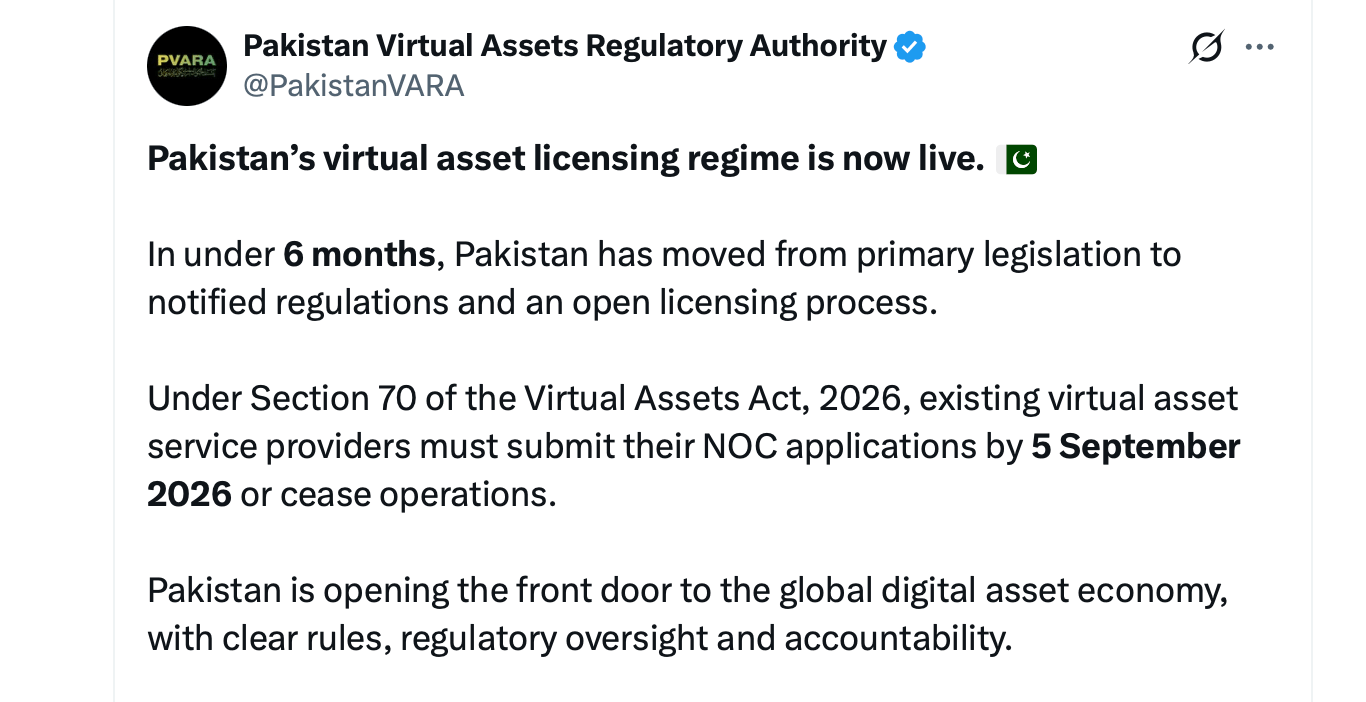
PVARA moved fast. The Virtual Assets Act installed the authority as Pakistan’s dedicated federal crypto regulator and gave existing businesses a six-month transition runway. Public consultations ran from June 11 through July 2, with final regulations and an operational licensing process landing in late August.
That clock matters because Pakistan’s crypto market never waited for permission. Estimates cited in the source report put the country’s crypto user base around 30 million to 40 million people, with billions of dollars already moving through digital assets while much of the business operated beyond a formal regulatory perimeter.
New Rules Pull Crypto Into the Banking System
The regulatory net stretches far beyond exchanges. PVARA’s license categories cover custody, broker-dealer operations, lending, derivatives, asset management, transfers, token issuance and mining or validation services. Firms can pursue multiple categories, but every lane carries its own financial, technology and compliance demands.
Licensed operators must wall off customer assets from company holdings and cannot lend or pledge client assets without written consent. Providers also face cybersecurity, governance, know-your-customer (KYC), transaction monitoring, and suspicious activity reporting rules. Directors and key personnel face suitability tests, while businesses confront local incorporation and minimum capital requirements.
The real carrot for compliant firms is banking access. An April 14 State Bank of Pakistan circular lets regulated banks provide accounts, including segregated customer accounts, to licensed virtual asset businesses. That unwinds restrictions dating to 2018 and finally gives approved crypto companies a cleaner bridge into Pakistan’s traditional financial system.
Binance and HTX Grab an Early Foothold
Applicants can follow an NOC-to-license route or enter a regulatory sandbox for supervised product testing. The NOC is essentially the first gate, coming before additional registration, local incorporation when required and the final push for a full license.
Binance and HTX secured preliminary NOCs in December 2025, giving both platforms a head start toward full licenses under the newly activated framework. Regulators can still slap temporary limits on customer onboarding, products, transaction volumes or custody arrangements while applications sit under review.
PVARA Chairman Bilal bin Saqib is selling the regime as something bigger than exchange policing. The authority wants regulated virtual assets reaching into remittances, cross-border payments, digital exports, trade finance and tokenized securities, with licensing and consumer protection serving as the opening move.
Sept. 5 Draws Pakistan’s Line in the Sand
For crypto users, tighter supervision could deliver harder protections around customer funds and smoother movement between digital assets and the banking system. The near-term risk is disruption if widely used providers miss the deadline or regulators clamp temporary restrictions on their operations during review.
The real test hits Sept. 5. Pakistan raced from legislation to an active licensing system in less than six months, but now comes the hard part: enforcing the rules, clearing applications and discovering which domestic and international crypto businesses decide that staying inside Pakistan is worth the compliance bill.
